Xylocaine 2% Jelly (lidocaine HCl) is a sterile water-based topical jelly that provides local anesthesia and lubrication. In Canadian clinical practice, it is used to help prevent and control pain during procedures involving the male and female urethra, for the topical treatment of painful urethritis, and as an anesthetic lubricant for endotracheal intubation (oral and nasal) in healthcare settings.
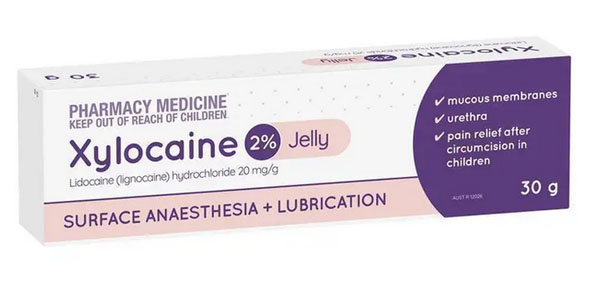
This product contains 2% lidocaine hydrochloride (20 mg/mL). Because using too much or using doses too close together can lead to high blood levels and serious side effects, use the lowest effective dose and follow your clinician's instructions.
Overview
Xylocaine 2% Jelly works by temporarily blocking nerve signals when it comes into contact with mucous membranes, which helps reduce pain during urologic procedures and provides lubrication for instruments. It is not meant for injection or neuraxial (spinal/epidural) use.
In Canada, patients generally do not need a prescription to buy lidocaine.
How Supplied
Xylocaine (lidocaine HCl) 2% Jelly is commonly available in 5 mL and 30 mL tubes (20 mg/mL). Packaging details may vary by manufacturer.
Uses of Xylocaine 2% Jelly
- Surface anesthesia of the male and female urethra during urologic procedures
- Topical treatment of painful urethritis
- Anesthetic lubrication for endotracheal intubation (oral and nasal) in clinical settings
Dosage
Dosage depends on the procedure, the area being anesthetized, and the patient's condition. Lower doses are recommended for children and for elderly or debilitated patients.
Maximum dosage: no more than 600 mg of lidocaine HCl (equivalent to 30 mL of 2% jelly) should be given in any 12-hour period.
Examples from clinical labeling (adults): for male urethral anesthesia, approximately 15 mL (300 mg) may be instilled; an additional dose of up to 15 mL (300 mg) may be used if needed. For female urethral anesthesia, approximately 3-5 mL (60-100 mg) may be instilled. Only a clinician should determine the appropriate dose for your situation.
Missed Dose
If you are using this medication on a schedule and miss a dose, use it when you remember. If it is almost time for your next dose, skip the missed dose. Do not double the dose.
Overdose
Using too much, using it too often, or applying it to damaged or infected mucous membranes can be harmful and may cause systemic effects (for example, dizziness, drowsiness, ringing in the ears, tremor, seizures, or an abnormal heart rhythm). If someone collapses, has a seizure, has trouble breathing, or cannot be awakened, call 911. For suspected poisoning in Canada, contact your provincial poison centre right away.
When not to Use?
Do not use Xylocaine 2% Jelly if you have a known allergy to lidocaine (amide-type local anesthetics) or any ingredient in the product.
- Do not use on infected and/or severely traumatized mucous membranes in the area of application.
- Do not use in patients with severe shock or heart block.
Interactions and Precautions
The toxic effects of local anesthetics are additive. Tell your clinician about all medications you use, especially if you may receive other local anesthetics.
Cases of methemoglobinemia have been reported with local anesthetic use. Get medical help right away if you notice gray or blue skin (cyanosis), unusual shortness of breath, fatigue, or a rapid heart rate.
Use for intubation (clinical settings)
When used as a lubricant for endotracheal intubation, apply the jelly to the outer surface of the endotracheal tube shortly before use. Avoid getting the product into the lumen of the tube, and do not use the jelly to lubricate endotracheal stylettes.
Storage
Store at room temperature: 20°C to 25°C (68°F to 77°F). Keep out of reach of children. Do not use after the expiry date on the package.