Amantadine (Symmetrel) is an antiviral medication mainly used to treat and help prevent influenza A infections. However, it has become less effective because many influenza A strains are now resistant to it. It is also used to help manage symptoms of Parkinson's disease and drug-induced movement disorders by increasing dopamine levels in the brain. Amantadine comes in several forms, including tablets and extended-release capsules. Symmetrel is a dopaminergic medication, which means it can raise the levels of certain chemicals that carry signals in the nervous system, including the brain.
Uses
Amantadine is an antiviral medication that is 70-90% effective at preventing influenza A infections and can reduce symptoms when started within 24-48 hours of symptom onset. Its effects are comparable to rimantadine and vaccination in some settings, but it becomes less useful after 48 hours, and resistance among influenza strains is an increasing concern. Amantadine is used mainly for influenza A.
Symmetrel capsules are used:
- to treat Parkinson's disease by improving muscle control and reducing stiffness, shakiness, and shuffling;
- to help treat shingles (herpes zoster) pain.
Symptoms
Certain signs can help tell different causes of influenza-like illness apart. Nasal congestion and rhinorrhea are common in most cases but rare in inhalational anthrax.
Fever, chills, fatigue, cough, headache, myalgia, sore throat, and rhinorrhea occur in 64-94% of laboratory-confirmed influenza cases. By comparison, similar symptoms occur in 62-94% of patients with other viral or bacterial infections (excluding inhalational anthrax), although fever is present in only 40-73%. Nausea or vomiting occurs in 12%, abdominal pain in 22%, shortness of breath in 6%, and chest discomfort in 23-35% of these patients. In inhalational anthrax, 60-80% of patients have shortness of breath and chest pain, 80-90% have nausea, and 70% report drenching sweats.
Initial chest radiographs in patients with inhalational anthrax often show mediastinal widening, infiltrates, and pleural effusion. Most influenza-like illnesses do not show pneumonia on radiographs, although it can occur in young children, older adults, and people with chronic lung disease. Influenza-associated pneumonia affects about 1-5% of adults and more than 20% of older adults with influenza.

Mechanism of Action
The exact mechanism behind amantadine's antiviral activity is not fully understood.
Like rimantadine, amantadine inhibits viral replication by interfering with the influenza A virus M2 protein, an integral membrane protein. The influenza A M2 protein works as an ion channel and is essential in at least two parts of viral replication: disassembly of the infecting virus particle and regulation of the ionic environment in the transport pathway. By interfering with the ion channel function of the M2 protein, amantadine blocks two stages of the influenza A replication cycle. Early in the cycle, it inhibits uncoating of the virus particle, likely by blocking the acid-mediated separation of virion nucleic acid and proteins, which prevents viral genome material from being transported into the nucleus.
Amantadine also prevents viral maturation in some strains of influenza A (for example, H7 strains) by promoting pH-induced conformational changes in influenza A hemagglutinin during intracellular transport later in the replication cycle. The virus's adsorption to cells and penetration into cells do not appear to be affected by amantadine. In addition, amantadine does not interfere with the synthesis of viral components (for example, RNA-directed RNA polymerase activity).
Treatment with amantadine for established influenza A infection does not appear to interfere with the body's antibody response to the infection, although some reduction in local immune responses has been seen in some patients. Because preventive use of amantadine can stop influenza illness and, to a lesser extent, subclinical infection, some people who take it may still develop immune responses that could help protect them when they are later exposed to the same or antigenically related viruses after stopping amantadine prophylaxis. Amantadine does not interfere with the immunogenicity of influenza A virus vaccine.
Amantadine-related increases in lysosomal pH may inhibit virus-induced membrane fusion in enveloped RNA viruses that are susceptible to higher concentrations of amantadine than those needed to inhibit influenza A.
Pharmacokinetics
Absorption
Amantadine hydrochloride is well absorbed from the gastrointestinal tract, with peak blood concentrations occurring 1-4 hours after an oral dose. For a 100 mg capsule, average peak plasma concentrations are about 0.22 mcg/mL at 3.3 hours, and similar concentrations are seen with the oral solution. Higher doses can lead to more than proportional increases in plasma concentration, especially above 200 mg daily.
Distribution
Amantadine is distributed into various tissues, including the heart, lungs, and kidneys, with higher concentrations in lung tissue than in blood. It is also found in nasal secretions and breast milk, with a notable erythrocyte-to-plasma ratio. The volume of distribution is about 3-8 L/kg.
Elimination
The elimination half-life of amantadine averages about 24 hours, but it can be longer in older adults and in people with renal impairment. It is excreted mainly unchanged in the urine, and some metabolites have been identified. Acidifying the urine can increase amantadine excretion, while hemodialysis removes only very small amounts of the drug.
Ingredients
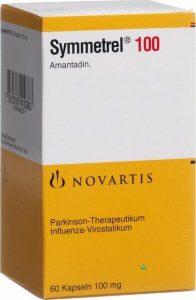
The active ingredient in this medicine is amantadine hydrochloride. Each Symmetrel capsule contains 100 mg amantadine hydrochloride. The other ingredients are lactose, povidone, magnesium stearate, red iron oxide (E172), titanium dioxide (E171), gelatin, and white printer ink.
Dosage
Symmetrel capsules are brownish-red hard gelatin capsules with SYMM printed on them in white. They come in boxes of 56 capsules.
Amantadine hydrochloride is taken by mouth as a single daily dose or, preferably, in 2 equally divided doses to reduce temporary side effects. If insomnia occurs, the last daily dose should be taken several hours before bedtime.
| Population |
Dosage |
| Adults (18-64 years) |
200 mg daily (single dose or 100 mg twice daily); in some cases, the maximum for prophylaxis is 100 mg daily. |
| Older adults (65+ years) |
100 mg once daily; a further reduction may be needed based on renal function. |
| Children (9-12 years) |
100 mg twice daily or 200 mg daily (in 1 or 2 divided doses). |
| Children (1-9 years) |
4.4-8.8 mg/kg daily (up to a maximum of 150 mg), given in 1 or 2 divided doses. |
| Children (<1 year) |
Dosage has not been established; use must be determined by a doctor. |
Duration of Therapy
Treatment
For the symptomatic treatment of respiratory tract illness caused by influenza A virus, amantadine hydrochloride should be started as soon as possible, ideally within 24-48 hours after symptoms begin. The Advisory Committee on Immunization Practices (ACIP) currently states that it may be advisable to stop amantadine treatment as soon as clinically appropriate, generally within 3-5 days or 24-48 hours after symptoms disappear, because there is some risk that influenza A strains resistant to amantadine and rimantadine may emerge during treatment. However, immunocompromised people may need a longer course of therapy.
Prevention
When a suspected influenza A outbreak occurs in a hospital, nursing home, or other institution housing high-risk patients, amantadine prophylaxis should be started as soon as possible after the outbreak is recognized and continued for at least 2 weeks or until about one week after the outbreak ends. When amantadine hydrochloride is used as an adjunct to influenza virus vaccine, it is usually given for 2 weeks after vaccination to provide chemoprophylaxis until a protective antibody response develops. Children younger than 9 years of age who are receiving influenza virus vaccine for the first time may need amantadine prophylaxis for up to 6 weeks after vaccination or until 2 weeks after the second vaccine dose.
When vaccination is contraindicated, amantadine prophylaxis may be given throughout the local influenza A outbreak, which may last 6-12 weeks. Amantadine prophylaxis may also be given throughout an outbreak when a poor antibody response to influenza vaccine is expected (for example, in patients with severe immunodeficiency, including acquired immunodeficiency syndrome (AIDS)).
The manufacturer states that prophylaxis with amantadine hydrochloride should be started before, or as soon as possible after, the patient has contact with someone who has a respiratory illness thought to be caused by influenza A virus, and it should be continued for at least 10 days after a known exposure.
Dosage in Renal Impairment
Patients with renal impairment, amantadine hydrochloride dosage should be adjusted carefully, and some clinicians recommend frequent monitoring of blood concentrations. One manufacturer recommends that patients with creatinine clearance of 15-50 mL/minute per 1.73 m2 receive 200 mg of amantadine on the first day, followed by maintenance doses of 100 mg given once daily in patients with creatinine clearance of 30-50 mL/minute per 1.73 m2 or once every other day in those with creatinine clearance of 15-29 mL/minute per 1.73 m2. This manufacturer recommends that patients with creatinine clearance below 15 mL/minute per 1.73 m2 and patients on hemodialysis receive 200 mg of amantadine every 7 days.
Because dosage adjustment based on creatinine clearance may only approximate the best dose for a given patient, these patients should be monitored so that side effects can be recognized quickly and the dose can be reduced further, or the drug stopped, if needed. Hemodialysis contributes minimally to amantadine clearance.
If You Forget to Take Symmetrel 100mg Capsules
If you miss a dose, take one as soon as you remember unless it is almost time for your next dose. Then carry on as usual. Do not take a double dose.
Doctors in Canada recommend confirming which form of amantadine is appropriate before use.
If You Stop Taking Symmetrel Capsules
Do not stop taking Symmetrel 100mg capsules suddenly, as your symptoms may get worse.
If you want to stop taking Symmetrel 100mg capsules, speak to your doctor. They will tell you how to reduce the dose gradually.
If you are taking antidepressants (used to treat mental health conditions) and you suddenly stop taking Symmetrel capsules, you may develop symptoms including:
- fever;
- sweating;
- a rapid heartbeat;
- muscle stiffness (difficulty moving);
- loss of bladder control (you may have a sudden urge to urinate).
Contact your doctor right away if you develop any of these symptoms.
Some patients may find that this medicine becomes less effective after taking it regularly for a few months. If this happens, tell your doctor.
Ask your doctor or pharmacist if you have any other questions about using this product.
Important Safety Information
Be careful when drinking alcohol while taking Symmetrel 100mg capsules, as it may affect you more than usual.
Symmetrel 100mg capsules should be taken with a glass of water.
Symmetrel 100mg capsules contain lactose. If your doctor has told you that you are intolerant to some sugars, contact your doctor before taking Symmetrel 100mg capsules.
Pregnancy and Breastfeeding
Do not take Symmetrel 100mg capsules if you are pregnant or trying to become pregnant. Do not take Symmetrel 100mg capsules if you are breastfeeding, because Symmetrel passes into breast milk and could harm your baby. Ask your doctor or pharmacist for advice before taking any medication.
Driving and Using Machines
Taking Symmetrel capsules may blur your vision or make you feel dizzy. If this happens, do not drive or use machines until the effect has worn off.
Resistant Strains of Influenza A Virus
Amantadine- and rimantadine-resistant strains of influenza A can develop in about 33% of patients treated with these antivirals. Patients may initially shed susceptible virus strains, but resistant strains can begin to appear after 2-7 days of therapy, and immunocompromised people may shed them for longer.
To help limit resistance, amantadine treatment should be stopped after 3-5 days or once symptoms have resolved. Although most patients recover even after resistant strains emerge, these strains are still pathogenic. They can reduce the value of drug prophylaxis for close contacts. People with influenza-like symptoms should avoid contact with uninfected individuals, whether or not they are taking antivirals.
Pediatric Precautions
The safety and effectiveness of amantadine in children younger than 1 year of age have not been established. In children, amantadine has caused central nervous system (CNS) symptoms that resolved when the drug was stopped. CNS-related side effects appear to be reported more often with amantadine than with rimantadine. A higher rate of seizures has been reported in children with an underlying seizure disorder who received amantadine.
Geriatric Precautions
Although the safety and effectiveness of amantadine in older adults have not been explicitly established, the drug has been used in many patients in this age group. The frequency and severity of CNS side effects reported in adults older than 65 years receiving amantadine are higher than those reported in older adults receiving rimantadine. Older adults may have reduced renal function, and because people with renal impairment may be at higher risk of amantadine-related toxicity, the dosage of amantadine hydrochloride for adults in this age group should not exceed 100 mg daily. This dose may need to be lowered further in some older patients.
Mutagenicity and Carcinogenicity
Amantadine was not mutagenic in the Ames microbial test using Salmonella typhimurium or in a mammalian mutagen assay using Chinese hamster ovary cells when the tests were performed with or without metabolic activation. In addition, there was no evidence of chromosome damage in an in vitro test using freshly derived and stimulated human peripheral blood lymphocytes (with or without metabolic activation) or in an in vivo mouse bone marrow micronucleus test (140-550 mg/kg; estimated human equivalent dosage of 11.7-45.8 mg/kg based on body surface area conversion). Long-term animal studies have not been performed to assess the carcinogenic potential of amantadine.
HIV-Infected Individuals
In Canada, annual influenza vaccination is recommended for all people living with HIV, including adults and children 6 months of age or older, as they may be at increased risk of influenza-related complications.
Influenza virus is not traditionally classified as an opportunistic pathogen. Still, many experts consider vaccination against it reasonable in any HIV-infected person, whether symptomatic or asymptomatic, because of the possible risk of respiratory infections in these patients, and many vaccinated individuals are likely to develop protective antibody levels.
Antiviral prophylaxis may be used alongside, or in some cases instead of, influenza vaccination in people living with HIV who may have a poor antibody response to the vaccine and/or a high risk of exposure to influenza A, especially during seasonal or institutional outbreaks. In Canadian practice, oseltamivir may be used to help prevent influenza A and B infection, while amantadine has historically been used for influenza A only.
Contraindications
Amantadine should be used with caution in patients with liver disease, uncontrolled psychosis, seizure disorders, or those taking CNS-active medications. Patients with a history of seizures need close monitoring for increased seizure activity. Because of possible CNS effects and visual disturbances, amantadine may impair the ability to do tasks that require alertness, such as driving. It is contraindicated in people with untreated angle-closure glaucoma.
Neuroleptic malignant syndrome (NMS) has been reported, especially when amantadine is reduced or stopped, so careful monitoring is needed in patients taking antipsychotics. Dosage adjustments may be needed in people with renal impairment, congestive heart failure, or orthostatic hypotension. Resistant strains of influenza A can emerge during treatment, creating a risk of transmission to high-risk individuals.
People with influenza-like illness should minimize contact with uninfected individuals. Clinicians should consider possible bacterial infections when treating suspected influenza. Amantadine is contraindicated in patients with known hypersensitivity to adamantane derivatives.
Do not take Symmetrel 100mg capsules in the following cases:
- if you are allergic (hypersensitive) to amantadine hydrochloride or any of the ingredients of Symmetrel capsules;
- if you have fits (convulsions), for example, epilepsy;
- if you have ever had an ulcer in your stomach or small intestine;
- if you have any severe kidney disease;
- if you are pregnant or trying to become pregnant;
- if you are breastfeeding.
If any of the above applies to you, or if you need more information, speak to your doctor or pharmacist before taking Symmetrel capsules.
Before you take Symmetrel capsules, tell your doctor if:
- you have any liver or kidney disease;
- you have a history of disease affecting the heart and blood vessels;
- you currently have heart problems or heart failure (heart problems that cause shortness of breath or swollen ankles);
- you have any mental illness, for example, schizophrenia or dementia;
- you have increased pressure in the eyes (glaucoma).
If any of the above applies to you, or if you need more information, speak to your doctor or pharmacist before taking Symmetrel capsules.
Interactions
Tell your doctor or pharmacist if you are taking or have recently taken any of the following medications, as they may interact with Symmetrel capsules:
| Anticholinergics |
such as procyclidine, used to treat Parkinson's disease |
| Antispasmodics |
such as hyoscine, used to treat stomach spasms or cramps |
| Levodopa |
used to treat Parkinson's disease |
| Antipsychotics |
such as chlorpromazine, haloperidol, used to improve thoughts, feelings, and behaviour when these are disturbed in certain medical conditions |
| Diuretics |
such as hydrochlorothiazide, amiloride, or triamterene, used to relieve water retention and reduce high blood pressure |
This medicine may also interact with the following:
- Influenza Virus Vaccine: Amantadine does not interfere with the antibody response to influenza vaccines and can be given at the same time.
- CNS Stimulants: Caution is advised when combining amantadine with CNS stimulants because of the risk of additive effects.
- Co-trimoxazole: Taking these together may reduce amantadine's renal clearance, mainly because of trimethoprim. Toxic delirium has been reported with this combination.
- Other Drugs: Combining amantadine with triamterene and hydrochlorothiazide increased plasma amantadine levels, although the exact cause is unclear. Quinidine or quinine may also reduce amantadine's renal clearance. In addition, using amantadine with CNS-active antihistamines can increase CNS side effects.
Tell your doctor or pharmacist if you are taking or have recently taken any other medications, including medications obtained without a prescription.
Side Effects
Amantadine can cause a range of side effects, which can be grouped by body system:
Additional information
You can find more information about Symmetrel (amantadine) here:
Common Side Effects
- Gastrointestinal: Nausea (5-10%), loss of appetite, constipation, diarrhea, dry mouth (1-5%), and vomiting (up to 1%).
- Nervous System: Dizziness, trouble sleeping, nervousness, confusion, agitation, hallucinations, and psychotic episodes. More severe effects may include seizures and neuroleptic malignant syndrome after stopping the medication.
- Cardiovascular: Orthostatic hypotension, peripheral edema (1-5%), congestive heart failure, arrhythmias, and tachycardia.
Less Common Side Effects
- Dermatological: Livedo reticularis (1-5%), rash, and sensitivity to sunlight.
- Ocular: Vision problems such as corneal opacity and reduced visual acuity (up to 1%).
- Psychiatric: Increased risk of mania and suicidal thoughts; symptoms may get worse in people with a history of mental health conditions.
Rare but Serious Effects
- Neurological: Peripheral neuropathy has been reported with long-term use; stopping the medication can lead to acute delirium.
- Hematologic: Rare cases of leukopenia and neutropenia.
- Respiratory: Shortness of breath and, rarely, acute respiratory failure.
Side effects are often dose-related, and higher doses can increase the risk of more severe reactions. People with kidney problems or a history of seizures may be at greater risk of central nervous system effects. Regular monitoring is recommended for people taking amantadine long term.
Toxicity
Manifestations
An amantadine overdose can be fatal, with the lowest reported lethal dose being 2 g. Symptoms of acute overdose include heart problems (arrhythmias, tachycardia, hypertension), pulmonary edema, kidney problems, and central nervous system toxicity (insomnia, anxiety, confusion, hallucinations). Reported cases have included severe reactions such as seizures and hyperthermia. For example, one patient who took 2.5 g experienced coma and cardiopulmonary arrest.
Treatment
There is no specific antidote for an amantadine overdose. If the overdose was recent, gastric lavage or inducing vomiting may be necessary. Supportive care includes monitoring vital signs and giving fluids. Electrocardiographic monitoring is essential because of the risk of tachyarrhythmias. Acidifying agents can increase amantadine excretion, but hemodialysis is only minimally effective. Close observation for hyperactivity and seizures is important; sedatives and anticonvulsants may be needed. Physostigmine has been used to manage central nervous system toxicity, but its risks should be considered.
Storage
Keep out of the reach and sight of children. Do not use Symmetrel capsules after the expiry date shown on the packaging. The expiry date refers to the last day of that month. If your doctor tells you to stop taking this medication, return any unused medicine to your pharmacist. Only keep it if your doctor tells you to.
Do not dispose of medications in wastewater or household garbage. Ask your pharmacist how to dispose of any medicines you no longer need. These measures help protect the environment.