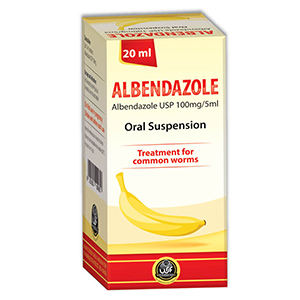
Albendazole is a synthetic benzimidazole anthelmintic. It is structurally related to thiabendazole and mebendazole and, like mebendazole, is a benzimidazole carbamate derivative. Albendazole is metabolized in the liver to an active metabolite, albendazole sulfoxide, which is responsible for the detectable plasma concentrations of the drug. Its systemic anthelmintic activity is thought to be due to this metabolite.
Although the exact way albendazole works has not been fully established, the main anthelmintic effect of benzimidazoles, including albendazole, appears to involve specific high-affinity binding to free tubulin in parasite cells. This selectively inhibits parasite microtubule polymerization and the microtubule-dependent uptake of glucose. Benzimidazole drugs bind to parasite tubulin at much lower concentrations than to mammalian tubulin. They do not inhibit glucose uptake in mammals and do not appear to affect blood glucose levels in humans.
For more information about this drug until a more detailed monograph is available, consult the manufacturer's product labelling. It is important to review the labelling for details on usual cautions, precautions, and contraindications.
Uses
Cestode (Tapeworm) Infections
Albendazole is used to treat tissue infections caused by the larval forms of certain cestodes (tapeworms), including neurocysticercosis caused by Cysticercus cellulosae, the larval form of Taenia solium (pork tapeworm). Albendazole is also used to treat hydatid disease caused by the larval form of Echinococcus granulosus (dog tapeworm). Other anthelmintics, usually praziquantel, are used to treat intestinal infections caused by adult cestodes.
Neurocysticercosis
Albendazole is used to treat parenchymal neurocysticercosis resulting from active lesions caused by Cysticercus cellulosae, the larval form of Taenia solium (pork tapeworm), preferably in combination with corticosteroids. Symptoms commonly linked to neurocysticercosis include headaches, seizures, and other central nervous system (CNS) effects thought to result from enlarging active cysticercal lesions or edema around individual degenerating cysts in the brain parenchyma. Important measures of response to anti-neurocysticercosis therapy therefore include improvement in CNS symptoms and radiologic response.
The manufacturer states that the safety and efficacy of albendazole in patients with neurocysticercosis caused by Taenia solium (T. solium) were shown through analysis of 3 sets of data: a compilation of published reports on albendazole use in neurocysticercosis, data from US compassionate-use patients, and data from one limited clinical study. In studies of patients with susceptible neurocysticercal lesions (that is, nonenhancing cysts with no surrounding edema on contrast-enhanced computerized tomography) who received albendazole, the number of cysts was reduced by 74-88%, and all active cysts resolved in 40-70% of patients.
Combining two data sets (the report compilation and compassionate-access data), the manufacturer states that about 41% of patients were cured (no symptoms of neurocysticercosis), about 50% were considered improved, and 9% had no change. Corticosteroids are used at the same time to reduce the frequency and severity of nervous system side effects (cerebrospinal fluid (CSF) reaction syndrome) associated with albendazole therapy for neurocysticercosis. Anticonvulsant therapy may also be needed. The use of anthelmintics (albendazole or praziquantel) in the treatment of cysticercosis remains controversial, since efficacy has not been proven in controlled studies. Initial treatment of parenchymal disease with seizures should focus on symptom control with anticonvulsants.
Obstructive hydrocephalus is treated with surgical removal of the obstructing cyst or CSF diversion and prednisone; arachnoiditis, vasculitis, or cerebral edema is treated with corticosteroids (prednisone or dexamethasone) used together with albendazole or praziquantel. Even when corticosteroids are used, any cysticercocidal drug may cause irreversible damage when used to treat ocular or spinal cysts, so eye exams should be performed before treatment to rule out intraocular cysts.
Hydatid Disease
Albendazole is used to treat cystic hydatid disease (unilocular hydatid disease) of the liver, lung, and peritoneum caused by the larval form of the dog tapeworm (Echinococcus granulosus). Surgery is considered the treatment of choice for hydatid disease when medically feasible, but perioperative treatment with an anthelmintic such as albendazole, mebendazole, or praziquantel may be indicated in patients undergoing surgical cyst removal to reduce the risk of intraoperative spread of daughter cysts. Percutaneous drainage with ultrasound guidance plus albendazole therapy has been effective in managing hepatic hydatid cyst disease.
Albendazole is absorbed to a greater extent and reaches higher plasma concentrations, as its active metabolite, than mebendazole. Some clinicians consider albendazole a drug of choice for hydatid cyst disease caused by Echinococcus granulosus (E. granulosus). Risks associated with surgery include operative morbidity, cyst recurrence, and anaphylaxis or spread of infection caused by spillage of fluid from the cysts.
Albendazole given before surgery may inactivate protoscolices and reduce the chance of recurrent cysts, and treatment after surgery may help prevent secondary spread of the cestode that can occur after spontaneous or operative rupture and spillage of cyst contents. The best cysticidal effect of albendazole before or after surgery is achieved when the drug is given in three 28-day courses.
Some clinicians also recommend albendazole for patients with inoperable, widespread, or numerous E. granulosus cysts, or for patients with complex medical problems who are not candidates for surgery. The manufacturer states that because hydatid disease is uncommon, the safety and efficacy of albendazole in patients with hydatid disease caused by E. granulosus were demonstrated by combining data from accumulated clinical reports in small patient series.
Four sets of data were considered, including compassionate-access data from Europe, an analysis of published studies, unevaluable compassionate-access data from Australia, and compassionate-access data from North America. About 80-90% of patients who received albendazole in three 28-day cycles had noninfectious cyst contents. About 30-31% of evaluable patients with hydatid disease who received albendazole had a clinical cure (that is, disappearance of cysts), and improvement (that is, a reduction in cyst diameter of at least 25%) was seen in about 40-42% of evaluable patients. About 24% of patients who received albendazole had no change or were considered worse.
Although albendazole has been used to treat alveolar hydatid disease, another form of hydatid cyst disease caused by Echinococcus multilocularis, surgical excision of the larval mass is the recommended and only reliable treatment for this infection. Continuous albendazole or mebendazole therapy has reportedly been associated with clinical improvement in nonresectable cases, but the manufacturer states that the efficacy of albendazole in treating alveolar hydatid disease caused by E. multilocularis has not been demonstrated in clinical studies.
Nematode (Roundworm) Infections
Ascariasis
Albendazole is used to treat ascariasis caused by Ascaris lumbricoides. Albendazole, mebendazole, or pyrantel pamoate are considered the drugs of choice for ascariasis.
Enterobiasis
Albendazole is used to treat enterobiasis caused by Enterobius vermicularis (pinworm). Albendazole, mebendazole, or pyrantel pamoate are considered the drugs of choice for enterobiasis.
Filariasis
Albendazole or mebendazole are recommended as the drugs of choice for filariasis caused by Mansonella perstans. Diethylcarbamazine (which in Canada may be available through Health Canada's Special Access Program) or ivermectin are usually recommended for infections caused by most other filarial worms.
Hookworm Infections
Albendazole is used to treat intestinal hookworm infections caused by Ancylostoma duodenale or Necator americanus, and albendazole, mebendazole, or pyrantel pamoate are considered the drugs of choice for these intestinal hookworm infections. Albendazole is also used to treat cutaneous larva migrans (creeping eruption) caused by dog and cat hookworms. Although cutaneous larva migrans usually resolves on its own after several weeks or months, albendazole, ivermectin, or thiabendazole are considered the drugs of choice when treatment is needed. Albendazole, mebendazole, or pyrantel pamoate are also considered drugs of choice for eosinophilic enterocolitis caused by Ancylostoma caninum (dog hookworm).
Toxocariasis (Visceral Larva Migrans)
Albendazole is used to treat toxocariasis (visceral larva migrans) caused by Toxocara canis or Toxocara cati (T. cati) (dog and cat roundworms), and albendazole or mebendazole are considered the drugs of choice for these infections. In severe cases with cardiac, ocular, or CNS involvement, corticosteroids may also be indicated. Treatment may not be effective in ocular larva migrans; inflammation may be reduced with corticosteroid injections, and surgery may be needed for secondary damage.
Trichinosis
Albendazole is used to treat trichinosis caused by Trichinella spiralis. Although some clinicians state that albendazole and mebendazole are equally effective for trichinosis, others consider mebendazole the drug of choice and albendazole an alternative. In addition to the anthelmintic, corticosteroids are usually recommended, especially when symptoms are severe. Corticosteroids relieve symptoms of the inflammatory reaction and can be lifesaving when the heart or CNS is involved.
Additional information
You can find more information about Albenza (albendazole) here:
Baylisascariasis
Albendazole has been used in a limited number of patients to treat baylisascariasis caused by Baylisascaris procyonis; however, no drug has been shown to be effective for this infection. Baylisascaris procyonis (B. procyonis), a common roundworm found in the small intestine of raccoons, can cause severe or fatal encephalitis (neural larva migrans) in birds and mammals, including humans, and can also cause ocular and visceral larva migrans in humans. Since 1981, there have been at least 12 cases of severe or fatal encephalitis caused by this roundworm in the US (California (CA), Illinois (IL), Michigan (MI), Minnesota (MN), New York (NY), Oregon (OR), Pennsylvania (PA)), and 10 of these cases occurred in children 9 months to 6 years of age. Cases of B. procyonis ocular larva migrans have also been reported in the US. Humans become infected by ingesting B. procyonis eggs after contact with infected raccoon feces.
Because CNS damage can occur before symptoms begin, treatment of symptomatic patients with anthelmintic or anti-inflammatory agents often does not improve outcomes. However, Canadian public health guidance indicates that an anthelmintic (that is, albendazole 25-50 mg/kg/day for 10 days) started within 1-3 days of possible infection might prevent clinical disease by killing larvae before they enter the CNS.
Immediate treatment is therefore recommended in cases of probable infection, including known exposures such as ingestion of raccoon stool or contaminated soil. Corticosteroid therapy may also be helpful, especially in ocular and CNS infections. Ocular baylisascariasis has been treated successfully with laser photocoagulation to destroy intraretinal larvae. Additional information on baylisascariasis is available from the Government of Canada at canada.ca.
Other Nematode Infections
Albendazole has been used to treat capillariasis caused by Capillaria philippinensis. Mebendazole is considered the drug of choice for capillariasis, and albendazole is considered an alternative. For gnathostomiasis caused by Gnathostoma spinigerum, albendazole, ivermectin, or surgical removal is recommended. For gongylonemiasis caused by Gongylonema, surgical removal or albendazole is recommended.
Albendazole is used in the treatment of infections caused by Trichostrongylus. Pyrantel pamoate is considered the drug of choice, and albendazole or mebendazole are alternatives for Trichostrongylus infections. Albendazole is used as an alternative to mebendazole for trichuriasis caused by Trichuris trichiura (whipworm). Albendazole or pyrantel pamoate may be effective for oesophagostomiasis caused by Oesophagostomum bifurcum.
Trematode (Fluke) Infections
For infections caused by Clonorchis sinensis (Chinese liver fluke), albendazole or praziquantel are recommended as the drugs of choice. Other anthelmintics, usually praziquantel, are recommended for all other fluke infections.
Giardiasis
Although metronidazole is generally the drug of choice for giardiasis caused by Giardia lamblia, albendazole may also be effective. Albendazole may be as effective as metronidazole in pediatric patients and may cause fewer side effects.
Microsporidiosis
Albendazole has been used in the treatment of microsporidiosis. Microsporidia can cause ocular infections (Encephalitozoon hellem, Encephalitozoon cuniculi (E. cuniculi), Vittaforma corneae), intestinal infections (Enterocytozoon bieneusi, Encephalitozoon intestinalis), and disseminated infections (E. hellem, E. cuniculi, E. intestinalis, Pleistophora, Trachipleistophora, Brachiola vesicularum). Intestinal infections are most common in immunocompromised patients and are being reported more often in patients with human immunodeficiency virus (HIV) infection.
Some clinicians recommend albendazole together with fumagillin (not commercially marketed in Canada) for ocular microsporidiosis and also consider albendazole the drug of choice for intestinal infections caused by E. intestinalis and for disseminated microsporidiosis. Although some patients with intestinal microsporidiosis caused by E. intestinalis may respond to albendazole, the organism is not eradicated in all patients, and diarrhea often returns after treatment is stopped. Patients with Enterocytozoon bieneusi (E. bieneusi) infections generally do not respond to albendazole.
Dosage and Administration
Administration
Albendazole is taken by mouth with food. Its oral bioavailability appears to increase when it is taken with a fatty meal; when given with meals containing about 40 g of fat, plasma concentrations of albendazole sulfoxide are up to 5 times higher than when the drug is given to fasting patients.
Albendazole may harm the fetus and should be used during pregnancy only if the benefits justify the risk and only when no appropriate alternative management is available. Women of childbearing age should start treatment only after a negative pregnancy test and should be advised not to become pregnant while taking albendazole or within 1 month after finishing treatment.
Albendazole has been associated with mild to moderate increases in liver enzymes in about 16% of patients receiving the drug in clinical trials and may cause hepatotoxicity. Liver function tests should therefore be performed before each course of albendazole therapy and at least every 2 weeks during treatment. If clinically important increases in liver function test results occur, albendazole should be discontinued. Leukopenia has occurred in less than 1% of patients receiving albendazole, and granulocytopenia, pancytopenia, agranulocytosis, or thrombocytopenia have rarely been reported.
Blood counts should therefore be performed at the start of, and every 2 weeks during, each 28-day treatment cycle. The manufacturer states that if the total leukocyte count decreases, treatment with albendazole may continue if the decrease is modest and does not progress.
Dosage
Cestode (Tapeworm) Infections Neurocysticercosis
Because of its activity against the pork tapeworm (T. solium), albendazole therapy for neurocysticercosis resulting from active lesions caused by Cysticercus cellulosae (the larval form of T. solium) has been associated with CNS side effects such as seizures and/or hydrocephalus caused by inflammatory reactions to damaged intracerebral cysts. Patients receiving albendazole for neurocysticercosis should therefore receive appropriate corticosteroid and anticonvulsant therapy as needed. Oral or intravenous (IV) corticosteroid therapy should be considered during the first week of albendazole treatment to prevent cerebral hypertension.
Although retinal cysticercosis is rare, patients with neurocysticercosis may have retinal lesions, and destruction of cysticercal lesions by albendazole may cause retinal damage. Patients should therefore be examined for retinal lesions and, if any are present, the need for treatment should be weighed against the possibility of retinal damage from albendazole.
For the treatment of neurocysticercosis in adults and children 6 years of age and older and weighing 60 kg or more, the usual dosage of albendazole is 400 mg twice daily with meals for 8-30 days. For patients weighing less than 60 kg, the usual daily dosage is 15 mg/kg/day (not to exceed 800 mg daily), given in 2 equally divided doses with meals for 8-30 days. Courses of therapy may be repeated as needed.
Hydatid Disease
Surgery is considered the treatment of choice for hydatid disease when medically feasible, and albendazole is given either before or after surgery. When albendazole is used as adjunctive perioperative treatment for hydatid disease, optimal killing of cyst contents is achieved by giving the drug in three 28-day courses, separated by two 14-day albendazole-free intervals. For the treatment of cystic hydatid disease of the liver, lung, or peritoneum caused by the larval form of the dog tapeworm (E. granulosus) in adults or children 6 years of age and older and weighing 60 kg or more, the usual dosage of albendazole is 400 mg twice daily with meals for 28 days, followed by a 14-day albendazole-free interval, for a total of 3 treatment cycles. For patients weighing less than 60 kg, the usual dosage is 15 mg/kg/day (not to exceed 800 mg daily), given in 2 equally divided doses with meals for 28 days, followed by a 14-day albendazole-free interval, for a total of 3 treatment cycles. Some clinicians recommend that adults receive 400 mg of albendazole twice daily and that pediatric patients receive 15 mg/kg/day (not to exceed 800 mg daily) for 1-6 months for the treatment of hydatid cyst disease.
Nematode (Roundworm) Infections Ascariasis
For the treatment of ascariasis caused by Ascaris lumbricoides, adult and pediatric patients should receive a single 400 mg dose of albendazole. Enterobiasis For the treatment of enterobiasis caused by Enterobius vermicularis (pinworm), some clinicians recommend that adult and pediatric patients receive an initial 400 mg dose of albendazole and a second 400 mg dose 2 weeks later.
Filariasis
For the treatment of filariasis caused by Mansonella perstans, some clinicians recommend that adults and pediatric patients receive albendazole 400 mg twice daily for 10 days.
Hookworm Infections
For intestinal hookworm infections caused by Ancylostoma duodenale or Necator americanus, or for eosinophilic enterocolitis caused by Ancylostoma caninum (dog hookworm), some clinicians recommend a single 400 mg dose of albendazole for adults and children. For cutaneous larva migrans (creeping eruption) caused by dog or cat hookworms, some clinicians recommend albendazole 400 mg once daily for 3 days in adults and children.
Toxocariasis (Visceral Larva Migrans)
For toxocariasis (visceral larva migrans) caused by dog and cat roundworms, some clinicians recommend albendazole 400 mg twice daily for 5 days in adults and children. However, the best length of treatment is not known, and some clinicians recommend continuing treatment for up to 20 days.
Trichinosis
The recommended dosage of albendazole for trichinosis caused by Trichinella spiralis in adults and children is 400 mg twice daily for 8-14 days.
Baylisascariasis
In an effort to prevent clinical illness by killing larvae before they enter the CNS, early albendazole treatment (within 1-3 days of possible infection) at a dosage of 25-50 mg/kg/day for 10 days is recommended in Canadian clinical practice. Immediate treatment is recommended if infection is likely; treatment should not be delayed until symptoms appear.
Other Nematode Infections
For capillariasis caused by Capillaria philippinensis, some clinicians recommend albendazole 400 mg once daily for 10 days in adults and children. Adults and children with gnathostomiasis caused by Gnathostoma spinigerum should receive albendazole 400 mg twice daily for 21 days, and adults and children with gongylonemiasis caused by Gongylonema should receive 10 mg/kg/day for 3 days.
For infections caused by Trichostrongylus, adults and children should receive a single 400 mg dose of albendazole. Adults and children with trichuriasis caused by Trichuris trichiura (whipworm) should receive albendazole 400 mg once daily for 3 days.
Trematode (Fluke) Infections
For infections caused by Clonorchis sinensis (Chinese liver fluke), some clinicians recommend albendazole 10 mg/kg/day for 7 days in adults and children.
Giardiasis
For giardiasis caused by Giardia lamblia in adults and children, albendazole has been given at a dosage of 400 mg daily for 5 days.
Microsporidiosis
For ocular or disseminated microsporidiosis, some clinicians recommend albendazole 400 mg twice daily for adults. For intestinal microsporidiosis caused by Encephalitozoon intestinalis, some clinicians recommend albendazole 400 mg twice daily for 21 days for adults.
Preparations
Albendazole
Oral tablets, film-coated 200 mg Albenza® Tiltab®, (with coated povidone) GlaxoSmithKline
Albendazole Side Effects
Albendazole, a benzimidazole derivative closely related to mebendazole (quod vide (qv)), is used to treat helminth infections such as gastrointestinal roundworms, hydatid disease, neurocysticercosis, cutaneous larva migrans, and strongyloidiasis. If an adequate concentration is reached within the cyst, it is scolicidal. In high doses given for long periods or in cycles, it is effective in echinococcosis, in which it is given at a dosage of 10 mg/kg/day for 4 weeks, repeated in six cycles with 2-week rest periods between each cycle, although even at this high dose only about one-third of patients have a complete cure and about 70% have a partial response. Albendazole is also active against Pneumocystis jiroveci and is effective for prevention and treatment in immunosuppressed mice. In hydatid disease, a combination of albendazole and praziquantel is effective when either agent has failed when used alone.
Albendazole: Observational and Comparative studies
Placebo-controlled studies
Albendazole has been used in the treatment and prevention of microsporidiosis in patients with acquired immunodeficiency syndrome (AIDS). In a small, double-blind, placebo-controlled trial, the efficacy and safety of albendazole treatment were studied in four patients who received albendazole 400 mg twice daily for 3 weeks and in four patients who received placebo. Microsporidia were cleared in all patients given albendazole, but in none of those given placebo. Afterwards, all eight patients were randomized again to receive either maintenance treatment with albendazole 400 mg twice daily or no treatment for the next 12 months; none of the three patients taking maintenance treatment had a recurrence, while three of the five who received no maintenance therapy developed a recurrence. During the double-blind part of the trial, there were no serious side effects in the patients who took albendazole, although two complained of headache, one of abdominal pain, one had raised transaminase activities, and one had thrombocytopenia. However, half of the patients were also taking triple anti-HIV therapy, which makes these abnormalities difficult to assess. The authors concluded that the side effects were not serious and did not interfere with maintenance therapy. The tentative conclusion from these findings is that albendazole may be useful in the treatment of microsporidiosis, which in patients with AIDS often leads to debilitating chronic diarrhea and is difficult to treat.
Use in non-infective conditions
The efficacy of albendazole has been evaluated in a few patients with either hepatocellular carcinoma or colorectal cancer with liver metastases that were refractory to other forms of treatment. In addition to hematological and biochemical indices, the tumour markers carcinoembryonic antigen (CEA) and alpha-fetoprotein (AFP) were measured to monitor treatment efficacy. One other patient with a neuroendocrine cancer and mesothelioma was treated on a compassionate basis and monitored only for side effects. Albendazole was given orally at a dose of 10 mg/kg/day in two divided doses for 28 days. Albendazole reduced CEA in two patients, and in the other five patients with measurable tumour markers, serum CEA or AFP was stabilized in three. In the seven patients who completed this pilot study, albendazole was well tolerated and there were no significant changes in any hematological, kidney, or liver function tests. However, three patients were withdrawn because of severe neutropenia, which resulted in the death of one. Neutropenia was more frequent than is usually seen in the treatment of hydatid disease. The authors speculated that this might be related to reduced metabolism in patients with liver cancer or liver metastases, leading to unmetabolized drug entering the circulation.
General adverse effects
As with other antihelminthic drugs, the general side effects of albendazole can reflect destruction of the parasite rather than a direct effect of the drug; fever is likely, even in the absence of other problems. Albendazole was well tolerated in 30-day courses of 10-14 mg/kg/day separated by 2-week intervals.
Its side effects are similar to those of mebendazole and may be more common because absorption is better and more reliable.
The direct side effects of albendazole are few and usually minor, and include stomach upset, dizziness, rash, and hair loss, which usually do not require stopping the drug. Early fever and neutropenia can also occur. Cyst rupture can also occur, as with mebendazole. About 15% of patients treated with albendazole at higher doses develop raised serum transaminases, making careful monitoring necessary and sometimes requiring treatment to be stopped after prolonged use. Careful monitoring of leukocyte and platelet counts is also recommended. Findings from animal studies suggest the possibility of teratogenicity and embryotoxicity, so the drug should be avoided during pregnancy.
Second-Generation Effects Teratogenicity
It has been emphasized that albendazole is teratogenic in animals and should not be used during pregnancy.
Drug-Drug Interactions
Antiepileptic drugs
The pharmacological interactions of the antiepileptic drugs phenytoin, carbamazepine, and phenobarbital with albendazole have been studied in 32 adults with active intraparenchymatous neurocysticercosis:
- nine patients took phenytoin 3-4 mg/kg/day;
- nine patients took carbamazepine 10-20 mg/kg/day;
- five patients took phenobarbital 1.5-4.5 mg/kg/day;
- nine patients took no antiepileptic drugs.
All were treated with albendazole 7.5 mg/kg every 12 hours on 8 consecutive days. Phenytoin, carbamazepine, and phenobarbital all induced the oxidative metabolism of albendazole to a similar extent in a non-enantioselective manner. As a result, there was a significant reduction in the plasma concentration of albendazole's active metabolite, albendazole sulfoxide.
Cimetidine
The poor intestinal absorption of albendazole, which may be increased by a fatty meal, contributes to difficulty predicting its therapeutic response in echinococcosis. The effect of co-administering cimetidine on the systemic availability of albendazole has been studied in six healthy men. After an overnight fast, a single oral dose of albendazole (10 mg/kg) was given on an empty stomach with water, a fatty meal, grapefruit juice, or grapefruit juice plus cimetidine. The systemic availability of albendazole was reduced by cimetidine. There were no adverse events. These results are consistent with presystemic metabolism of albendazole by cytochrome P450 3A4 (CYP3A4).
Albendazole: Organs and Systems
Nervous system
When used to treat neurocysticercosis, albendazole (like praziquantel) can cause a CSF syndrome characterized by fever, headache, meningism, and worsening of some or many of the neurological signs of the disease; this is thought to be due to a local reaction to dying and dead larvae and can be reduced by prednisone.
Since neurocysticercosis is a neurological infection, it is not surprising that when it is treated with any drug, some neurological reactions to that drug (or to the death of the parasite) can be especially pronounced. For example, with a dose of 1.5 mg/kg continued for some time in cases of neurocysticercosis, most patients initially develop intolerance in the form of headache, vomiting, fever, and occasionally diplopia and meningeal irritation. Similar effects have also been reported with shorter and less intensive treatment. However, all of these symptoms are probably due to the death of the parasite, and if therapy is continued they usually disappear within a few days. Even so, they can be alarming and may need treatment. Data from large studies mention drowsiness and even transient hemiparesis as occasional side effects.
Very rarely, in neurocysticercosis, the nervous system's reaction to the death of the parasite is extremely severe. In one case, cerebral edema resulted in permanent neurological damage, while other patients developed hydrocephalus or acute intracranial hypertension requiring treatment, for example with glucocorticoids or mannitol.
Albendazole has sometimes worsened extrapyramidal disorders or triggered seizures in patients with previous epileptic symptoms. The risk of intracranial hypertension has led some to suggest that glucocorticoids should be given preventively when using albendazole in neurocysticercosis. However, dexamethasone can interact with albendazole and increase its plasma concentrations, and it is not clear whether this might cause new problems.
Encephalopathy is a side effect related to treatment of Loa loa (L. loa) with diethylcarbamazine or ivermectin, and it has also been linked to albendazole.
A 55-year-old woman from Cameroon took oral albendazole 200 mg twice daily for symptomatic L. loa infection with microfilaremia of 152 microfilariae/ml and Mansonella perstans infection of 133 microfilariae/ml. Three days after starting therapy, she developed encephalopathy. Albendazole was stopped, and she recovered without any specific treatment within the next 16 hours. On day 4, the L. loa microfilarial count was 29 microfilariae/ml.
The clinical presentation, the interval after starting treatment, the course of the episode, and the results of cerebrospinal fluid analysis and electroencephalography in this case were similar to those seen in cases of encephalopathy after treatment of L. loa with ivermectin or diethylcarbamazine. However, pretreatment filaremia was relatively low and L. loa microfilariae were not detectable in the cerebrospinal fluid. This suggests that pre-existing conditions might increase susceptibility to encephalopathy.
Sensory systems
Allergic conjunctivitis has been seen in cases of occupational skin reactions to albendazole in industrial settings.
Hematologic
There have been various reports of bone marrow depression. In one study, two of 20 patients had a reversible drop in leukocyte count. Pancytopenia, reversible after stopping the drug, has been documented in an elderly woman. Even with high doses, neutropenia occurs in under 1% of cases. In older literature, an occasional fatal hematological event was reported.
Megakaryocytic thrombocytopenia attributed to albendazole has been reported.
A 25-year-old woman who had been taking albendazole 13 mg/kg/day for 5 months for hepatic and pulmonary echinococcosis developed fatigue, bleeding gums, and prolonged menstrual bleeding. She had ecchymoses and petechiae on her legs, marked thrombocytopenia (10 x 109/1), mild iron deficiency anemia, and a normal leukocyte count. There was no antiplatelet immunoglobulin. Bone marrow aspiration showed absent megakaryocytes with normal granulocytes and mild erythroid hyperplasia. A cytogenetic study of the bone marrow showed a normal karyotype and immunophenotype. Albendazole was stopped and oral iron was given. At follow-up 2 months later, all laboratory abnormalities had resolved.
Gastrointestinal
With a single oral dose of albendazole 400 mg, side effects are usually limited to mild gastrointestinal upset, especially epigastric pain or dry mouth, occurring in only about 6% of patients in some large series; a few patients have abdominal pain. With higher doses, central nervous system irritation can lead to nausea and vomiting.
Diarrhea occurs in a few patients taking albendazole and is usually mild. However, a typical case of pseudomembranous colitis has been documented, although the patient also had AIDS and intestinal microsporidiosis and had taken a number of other drugs; the complication responded to vancomycin.
Liver
Even with single low doses, a transient increase in transaminase activities has been reported repeatedly, generally affecting up to 13-20% of patients taking albendazole. At higher doses, moderate hepatitis has been reported in almost all patients in some accounts, but in one series using high doses of albendazole or mebendazole for echinococcosis, only 17% had a generally slight increase in serum transaminases, and a fair number of these patients had pre-existing liver disorders. Like various other side effects, the increase in transaminases may be due to breakdown of liver cysts; it is almost always reversible and is usually not a reason to stop treatment, and it does not become more marked during long-term treatment. Very occasionally, a person develops jaundice or another sign of hepatitis.
Skin
A generalized rash has sometimes been seen in patients taking albendazole, and skin complications, including urticaria and contact dermatitis, are a potential problem in pharmaceutical industry workers with heavy exposure to the drug.
A 38-year-old woman with cough, eosinophilia, and pulmonary infiltrates due to visceral larva migrans from Toxocara canis infection took albendazole 600 mg for 8 weeks and developed slight transient skin eruptions.
Stevens-Johnson syndrome was reported in a man who took albendazole 400 mg/day for toxocariasis.
Hair
There are various well-documented reports of reversible hair loss in patients taking albendazole, which in one study occurred in 2% of cases and in another study in one case out of 20.
- Severe hair loss has been described in a child who was almost 3 years old and took albendazole 400 mg/day for 3 days; 2 months later, alopecia developed and resolved within 1 month.
- When one woman took 400 mg twice daily for 10 months for hydatid disease, she lost much of her hair; no other likely cause could be identified, and her hair growth recovered when the drug was stopped.
Oddly, however, a fair proportion of patients who are specifically asked seem to say that their hair growth actually improved during treatment.
Musculoskeletal
Muscle pain and joint pain can occur in patients taking albendazole. However, these symptoms are often part of the disease being treated.