Cefaclor
Cefaclor is a semisynthetic, second-generation cephalosporin antibiotic.
Uses
Cefaclor is taken by mouth to treat mild to moderate upper and lower respiratory tract infections (including pneumonia) caused by susceptible bacteria; acute otitis media caused by susceptible bacteria; pharyngitis and tonsillitis caused by Streptococcus pyogenes (group A beta-hemolytic streptococci); and uncomplicated skin and skin structure or urinary tract infections (including pyelonephritis and cystitis) caused by susceptible bacteria.
Commercially available cefaclor capsules and oral suspension can be used for any of these infections. However, the safety and effectiveness of cefaclor extended-release tablets have been established only for mild to moderate respiratory tract infections (such as acute flare-ups of chronic bronchitis and secondary bacterial infections of acute bronchitis) caused by susceptible bacteria; pharyngitis and tonsillitis caused by S. pyogenes; and mild to moderate uncomplicated skin and skin structure infections caused by susceptible Staphylococcus aureus (methicillin-susceptible strains only).
Respiratory Tract Infections
Cefaclor capsules and oral suspension are used to treat lower respiratory tract infections (including pneumonia) caused by susceptible Streptococcus pneumoniae, Haemophilus influenzae, or S. pyogenes. Cefaclor extended-release tablets are used to treat mild to moderate acute flare-ups of chronic bronchitis or secondary bacterial infections of acute bronchitis caused by susceptible H. influenzae (non-beta-lactamase-producing strains only), Moraxella (formerly Branhamella) catarrhalis (including beta-lactamase-producing strains), or S. pneumoniae.
The manufacturer notes that there are not enough data to establish the effectiveness of cefaclor extended-release tablets for treating acute or chronic bronchitis known or suspected to be caused by beta-lactamase-producing strains of H. influenzae.
In adults with acute bacterial bronchitis or acute bacterial flare-ups of chronic bronchitis treated with cefaclor capsules (250 mg 3 times daily), the overall clinical response rate (cure or improvement) is reported as 92%, and the overall bacteriologic elimination rate is 80-92%.
When results are grouped by the organism causing the infection, the bacteriologic elimination rate is 85% for infections caused by H. influenzae and 100% for those caused by H. parainfluenzae or Klebsiella pneumoniae; 81% for infections caused by S. pneumoniae; and 75% for infections caused by M. catarrhalis.
Otitis Media
Acute Otitis Media
Cefaclor capsules and oral suspension are used to treat acute otitis media caused by S. pneumoniae, H. influenzae, staphylococci, or S. pyogenes (group A beta-hemolytic streptococci).
Results from controlled clinical studies in children with acute otitis media show that a 10-day course of oral cefaclor is generally as effective as a 10-day course of oral amoxicillin, oral cefixime, oral cefprozil, or oral ceftibuten.
Cefaclor has also been effective in some children when given for 5 days; however, the shorter regimen appears to be less effective in patients with spontaneous perforation of the eardrum and purulent drainage than in those with intact eardrums.
In a controlled study in children with acute otitis media who were randomized to receive oral cefaclor for 5 or 10 days (20 mg/kg twice daily), the treatment failure rate in those with intact eardrums at the time of diagnosis was 10% with the 5-day regimen and 6% with the 10-day regimen. In those with spontaneous perforation of the eardrum at diagnosis, the failure rate was 53% and 8%, respectively.
More study is needed to assess the use of a 5-day oral cefaclor regimen for treating acute otitis media.
Some clinicians caution that short anti-infective regimens (5 days or less) may not be appropriate for treating acute otitis media in children younger than 2 years of age or in patients with underlying disease, recurrent or persistent otitis media, or perforated eardrums with spontaneous purulent drainage.
Cefaclor has also been used long term as prophylaxis or suppressive therapy in an attempt to prevent further episodes of acute otitis media in children with a history of recurrent acute otitis media. However, anti-infective prophylaxis is not routinely recommended for most children with recurrent acute otitis media because of concerns that these regimens may promote the emergence of resistant organisms.
In a retrospective study of prophylactic anti-infective use in children 1 month to 15 years of age with a history of recurrent acute otitis media (AOM) (more than 3 episodes within a 6-month period and/or 6 or more episodes by 18 months of age), patients received a 10-day course of oral amoxicillin or oral cefaclor to treat the acute episode and then a suppressive regimen of amoxicillin (20 mg/kg once daily) or cefaclor (20 mg/kg once daily) for a mean duration of 8.6 weeks (range: 3-20 weeks).
Results show that suppressive therapy failed in 47% of those receiving cefaclor and 70% of those receiving amoxicillin; most of these patients needed other interventions (for example, tympanostomy tubes).
For more information about treating acute otitis media, including persistent or recurrent acute otitis media, see Acute Otitis Media and Persistent or Recurrent Acute Otitis Media, under Uses: Otitis Media in the Cephalosporins General Statement 8:12.06.
Otitis Media with Effusion
Results of a randomized study in children 7 months to 12 years of age with otitis media with effusion indicate that 14 days of treatment with oral cefaclor (40 mg/kg daily in 3 divided doses), oral erythromycin-sulfisoxazole (50 mg/kg of erythromycin and 150 mg/kg of sulfisoxazole daily in 4 divided doses), or oral amoxicillin (40 mg/kg daily in 3 divided doses) are similarly effective for short-term resolution of otitis media with effusion and are associated with similar recurrence rates.
At the end of the 14-day regimen, middle ear effusion had resolved in 22% of those who received cefaclor, 21% of those who received erythromycin-sulfisoxazole, and 31% of those who received amoxicillin; acute otitis media developed during treatment in 2 patients who received cefaclor.
Among those who were effusion-free at 4 weeks, recurrence during the next 12 weeks occurred in 52% of those who received cefaclor, 47% of those who received erythromycin-sulfisoxazole, and 60% of those who received amoxicillin.
The best approach to managing otitis media with effusion (residual or persistent middle ear effusion without signs or symptoms of infection; also called noninfected or nonsuppurative otitis media, secretory otitis media, serous otitis media, middle ear effusion, fluid ear, glue ear) has not been clearly established, and the use of anti-infective therapy in these patients remains controversial.
For more information about treatment of otitis media with effusion, see Otitis Media with Effusion under Uses: Otitis Media, in the Cephalosporins General Statement 8:12.06.
Pharyngitis and Tonsillitis
Cefaclor capsules, oral suspension, and extended-release tablets are used to treat pharyngitis and tonsillitis caused by susceptible S. pyogenes (group A beta-hemolytic streptococci).
Although cefaclor is usually effective in eradicating S. pyogenes from the nasopharynx, substantial data to establish the drug's effectiveness for preventing subsequent rheumatic fever are not currently available.
A 10-day course of oral cefaclor is at least as effective as a 10-day course of oral penicillin V or oral amoxicillin and clavulanate potassium for treating S. pyogenes pharyngitis and tonsillitis.
In an open, randomized study in adults and adolescents 12 years of age or older with acute pharyngitis caused by S. pyogenes, a 10-day course of oral cefaclor (250 mg 3 times daily) was at least as effective as a 10-day course of oral cefprozil (500 mg once daily). The clinical response rate was 85% for both drugs, and the bacteriologic eradication rate was 95% in those who received cefaclor and 91% in those who received cefprozil.
In double-blind, randomized multicentre studies comparing a 10-day course of cefaclor capsules (250 mg 3 times daily) with a 10-day course of cefaclor extended-release tablets (375 mg twice daily), the clinical response rates were 98% and 96%, respectively, and the bacteriologic eradication rates were 94% and 93%, respectively.
Choosing an anti-infective regimen for S. pyogenes pharyngitis and tonsillitis should be based on the drug's spectrum of activity, bacteriologic and clinical effectiveness, possible side effects, ease of use and patient adherence, and cost. No regimen has yet been shown to eradicate group A beta-hemolytic streptococci in 100% of patients.
Because penicillin has a narrow spectrum of activity, is inexpensive, and generally works well, Canadian guidance generally considers natural penicillins (that is, 10 days of oral penicillin V or a single intramuscular (IM) dose of penicillin G benzathine) the treatment of choice for streptococcal pharyngitis and tonsillitis and for preventing initial attacks (primary prevention) of rheumatic fever, although oral amoxicillin is often used instead of penicillin V in small children because it is usually better tolerated in terms of taste.
Other anti-infectives (for example, oral cephalosporins and oral macrolides) are generally considered alternatives. There is some evidence that bacteriologic and clinical cure rates reported with 10-day regimens of certain oral cephalosporins (for example, cefaclor, cefadroxil, cefdinir, cefixime, cefpodoxime proxetil, cefprozil, cefuroxime axetil, ceftibuten, cephalexin) are slightly higher than those reported with a 10-day course of oral penicillin V.
There is also some evidence that shorter treatment with certain oral cephalosporins (for example, a 5-day course of cefadroxil, cefdinir, cefixime, or cefpodoxime proxetil or a 4- or 5-day course of cefuroxime axetil) achieves bacteriologic and clinical cure rates equal to or greater than those achieved with the traditional 10-day course of oral penicillin V.
Based on these results, some clinicians suggest that oral cephalosporins should be included among the preferred options for treating S. pyogenes pharyngitis and tonsillitis.
However, clinical guidance indicates that first-generation cephalosporins can be used to treat pharyngitis in patients with penicillin hypersensitivity (except those with immediate-type hypersensitivity to beta-lactam anti-infectives), but cephalosporins do not appear to offer an advantage over penicillins because they have a broader spectrum of activity and are generally more expensive.
In addition, because data are still limited, clinical guidance does not currently recommend cephalosporin regimens given for 5 days or less to treat S. pyogenes pharyngitis.
Skin and Skin Structure Infections
Cefaclor capsules, oral suspension, and extended-release tablets are used to treat uncomplicated skin and skin structure infections caused by Staphylococcus aureus (methicillin-susceptible strains only).
Cefaclor capsules and oral suspension can also be used to treat uncomplicated skin and skin structure infections caused by S. pyogenes. However, the manufacturer states that the effectiveness of cefaclor extended-release tablets for uncomplicated skin or skin structure infections known or suspected to be caused by these bacteria has not been established.
In a multicentre, randomized study in adults and children 2 years of age or older with mild to moderate bacterial skin and skin structure infections (for example, carbuncle, cellulitis, folliculitis, furuncle, impetigo, infected dermatitis, paronychia, pyoderma, superficial abscess, wound infection), patients were randomized to receive 5-10 days of treatment with oral cefaclor (250 mg 3 times daily in adults or 20 mg/kg daily in 3 doses) or oral cefprozil (500 mg once daily in adults or 20 mg/kg once daily in children).
Results indicate that cefaclor and cefprozil are equally effective for these infections and are tolerated similarly; a satisfactory clinical response was achieved in 92% and 93% of patients, respectively, and the bacteriologic eradication rate was 89% and 91%, respectively.
Urinary Tract Infections
Cefaclor capsules and oral suspension are used to treat urinary tract infections (including pyelonephritis and cystitis) caused by susceptible Escherichia coli, Klebsiella, Proteus mirabilis, or coagulase-negative staphylococci.
Dosage and Administration
Administration
Cefaclor is taken by mouth. Cefaclor extended-release tablets should not be cut, crushed, or chewed. Food does not affect the extent of absorption of cefaclor given as capsules, but it does increase absorption of the extended-release tablets.
To improve gastrointestinal (GI) absorption, the manufacturer recommends taking cefaclor extended-release tablets with meals (that is, within 1 hour of eating).
Taking an antacid containing magnesium or aluminum hydroxide within 1 hour of a dose of cefaclor extended-release tablets decreases absorption of the drug.
Dosage
Dosage of cefaclor, which is commercially available as the monohydrate, is expressed as anhydrous cefaclor.
Adult Dosage
The usual adult dosage of cefaclor given as capsules or oral suspension is 250 mg every 8 hours; for more serious infections or those caused by less susceptible organisms, 500 mg may be given every 8 hours.
Although the daily dosage of cefaclor capsules or oral suspension is usually given in 3 equal doses, the manufacturer states that it may be given in 2 equal doses at 12-hour intervals for the treatment of otitis media or pharyngitis.
Respiratory Tract Infections
For the treatment of acute bacterial flare-ups of chronic bronchitis or secondary bacterial infections of acute bronchitis caused by susceptible H. influenzae (non-beta-lactamase-producing strains only), M. catarrhalis (including beta-lactamase-producing strains), or S. pneumoniae, the usual adult dosage of cefaclor extended-release tablets is 500 mg every 12 hours for 7 days.
Pharyngitis and Tonsillitis
For the treatment of pharyngitis and/or tonsillitis caused by susceptible S. pyogenes, the usual adult dosage of cefaclor extended-release tablets is 375 mg every 12 hours for 10 days.
Skin and Skin Structure Infections
Adults should receive cefaclor extended-release tablets at a dosage of 375 mg every 12 hours for 7-10 days for the treatment of uncomplicated skin and skin structure infections caused by susceptible S. aureus.
Pediatric Dosage
The usual dosage of cefaclor capsules or oral suspension for children 1 month of age or older is 20 mg/kg daily given in divided doses every 8 hours.
For more serious infections, otitis media, or infections caused by less susceptible organisms, the manufacturer recommends a pediatric dosage of 40 mg/kg daily, to a maximum daily dose of 1 g.
Although the daily dosage of cefaclor capsules or oral suspension is usually given in 3 equal doses, it may be given in 2 equal doses at 12-hour intervals for the treatment of acute otitis media or pharyngitis.
Safe use of cefaclor capsules or oral suspension in infants younger than 1 month of age has not been established. Safety and effectiveness of cefaclor extended-release tablets in children younger than 16 years of age have not been established.
Dosage in Renal Impairment
The manufacturer states that cefaclor should be used with caution in patients with markedly impaired renal function. Modification of the usual dosage is generally not necessary in patients with moderate or severe renal impairment.
However, because clinical experience in these patients is limited, close clinical observation and appropriate laboratory tests are recommended for patients with moderate or severe renal impairment.
Cautions
Adverse Effects
Most side effects reported with cefaclor are similar to those reported with other oral cephalosporins. The most commonly reported side effects with cefaclor include GI effects (diarrhea, nausea, vomiting), headache, and rash.
Serum sickness-like reactions consisting of erythema multiforme or a maculopapular itchy rash or hives, accompanied by arthritis, joint pain, irritability, and fever, have rarely been reported in patients receiving cefaclor.
These reactions differ from type III serum sickness hypersensitivity reactions because they generally are not associated with lymphadenopathy and proteinuria; circulating immune complexes have not been identified, and sequelae have not been reported.
Serum sickness-like reactions have been reported most often in children younger than 6 years of age receiving cefaclor oral suspension for the treatment of acute otitis media, pharyngitis and tonsillitis, or other upper respiratory tract infections, and they occur most often with the second or later course of the drug.
Signs and symptoms of the reaction usually become apparent 2-11 days after starting cefaclor therapy and begin to subside within a few days after the drug is stopped.
Oral antihistamines and corticosteroids provide symptomatic relief and may help the reaction resolve; short-term (that is, 2-3 days) hospitalization has been necessary in some patients because of symptoms (for example, joint pain) ranging from mild to severe.
The true incidence of serum sickness-like reactions in patients receiving cefaclor is unclear but has been estimated to be 0.5% or lower.
Although similar serum sickness-like reactions have rarely been reported with other cephalosporins (for example, cefprozil, cephalexin) or other beta-lactam antibiotics (for example, amoxicillin, loracarbef), these reactions have been reported more often with cefaclor than with any other anti-infective agent.
The manufacturer and some clinicians recommend that cefaclor not be used in patients who have had a serum sickness-like reaction to the drug; however, it has been suggested that a history of a serum sickness-like reaction to cefaclor does not necessarily rule out the use of other cephalosporins or other beta-lactam antibiotics.
Severe hypersensitivity reactions, including Stevens-Johnson syndrome, toxic epidermal necrolysis, and anaphylaxis, have rarely been reported with cefaclor.
Anaphylactic reactions may appear as isolated symptoms, including angioedema, asthenia, edema (including of the face and limbs), dyspnea, paresthesia, vertigo, syncope, hypotension, or vasodilation.
There has been at least one report of hypersensitivity myocarditis that appeared to be a sensitivity reaction to cefaclor. The manufacturer states that hypersensitivity reactions may rarely persist for several months.
Precautions and Contraindications
Cefaclor shares the toxic potential of other cephalosporins, and the usual cautions, precautions, and contraindications associated with cephalosporin therapy should be observed.
Before starting cefaclor therapy, clinicians should carefully ask about any previous hypersensitivity reactions to cephalosporins, penicillins, or other drugs. There is clinical and laboratory evidence of partial cross-allergenicity among cephalosporins and other beta-lactam antibiotics, including penicillins and cephamycins.
Cefaclor is contraindicated in patients who are hypersensitive to the drug or other cephalosporins and should be used with caution in patients with a history of hypersensitivity to penicillins.
Cephalosporins should be avoided in patients who have had an immediate-type (anaphylactic) hypersensitivity reaction to penicillins. If a hypersensitivity reaction occurs during cefaclor therapy, the drug should be stopped and the patient treated as appropriate (for example, epinephrine, corticosteroids, and maintenance of an adequate airway and oxygen).
Pediatric Precautions
Safety and effectiveness of cefaclor capsules and oral suspension in children younger than 1 month of age have not been established. Safety and effectiveness of cefaclor extended-release tablets in children younger than 16 years of age have not been established.
Geriatric Precautions
Safety and effectiveness of cefaclor in geriatric adults (that is, those older than 65 years of age) are similar to those seen in younger adults.
Although peak plasma concentrations of cefaclor and the area under the plasma concentration-time curve (AUC) may be higher in older adults with normal serum creatinine values than in younger adults, the manufacturer states that no dosage adjustment appears to be necessary in these patients.
Mutagenicity and Carcinogenicity
Animal studies have not been done to date to assess the mutagenic and carcinogenic potential of cefaclor.
Pregnancy, Fertility, and Lactation
Reproduction studies in mice, rats, and ferrets using doses up to 3-5 times the maximum human dosage (1500 mg daily) based on mg/m2 have not shown evidence of harm to the fetus.
There are no adequate, well-controlled studies of cefaclor in pregnant women or during labour and delivery, and the drug should be used during pregnancy only when clearly needed.
Reproduction studies in animals using cefaclor have not shown evidence of impaired fertility.
Because low concentrations of cefaclor (0.1-0.6 mcg/mL) have been found in milk after a single 500-mg oral dose, cefaclor should be used with caution in breastfeeding women.
Acute Toxicity
Too much cefaclor may cause nausea, vomiting, epigastric distress, and diarrhea; the severity of the epigastric distress and diarrhea appears to be dose related. If other symptoms are present, they are probably secondary to an underlying disease, an allergic reaction, or the effects of other poisoning.
The manufacturer states that, in the event of cefaclor overdose, GI decontamination is not necessary unless 5 times the normal dose has been taken. The benefits of forced diuresis, peritoneal dialysis, hemodialysis, or charcoal hemoperfusion in treating cefaclor overdose have not been established.
Spectrum
Based on its spectrum of activity, cefaclor is classified as a second-generation cephalosporin.
Although cefaclor is less active in vitro against gram-negative bacteria than other second-generation cephalosporins currently available, it is active against some gram-negative bacteria that are generally resistant to first-generation drugs (for example, Haemophilus influenzae).
For information on the classification of cephalosporins and closely related beta-lactam antibiotics based on spectrum of activity, see Spectrum in the Cephalosporins General Statement 8:12.06.
In Vitro Susceptibility Testing
The National Committee for Clinical Laboratory Standards (NCCLS) states that if results of in vitro susceptibility testing show that a clinical isolate is susceptible to cefaclor, then an infection caused by this strain may be appropriately treated with the dosage recommended for that type of infection and infecting species, unless otherwise contraindicated.
If results show that a clinical isolate has intermediate susceptibility to cefaclor, then the strain has a minimum inhibitory concentration (MIC) that approaches usually attainable blood and tissue drug concentrations, and response rates may be lower than for strains identified as susceptible.
Therefore, the intermediate category suggests possible clinical use in body sites where the drug is physiologically concentrated (for example, urine) or when a high dosage can be used.
This intermediate category also includes a buffer zone intended to prevent small, uncontrolled technical factors from causing major differences in interpretation, especially for drugs with narrow pharmacotoxicity margins.
If results of in vitro susceptibility testing show that a clinical isolate is resistant to cefaclor, the strain is not inhibited by systemic concentrations achievable with usual dosage schedules and/or MICs fall within the range where specific microbial resistance mechanisms are likely, and efficacy has not been reliably shown in clinical trials.
Strains of staphylococci resistant to penicillinase-resistant penicillins should be considered resistant to cefaclor, even if results of in vitro susceptibility tests indicate that the organisms are susceptible to the drug.
In addition, NCCLS recommends that beta-lactamase-negative, ampicillin-resistant (BLNAR) strains of H. influenzae should be considered resistant to cefaclor even though results of in vitro susceptibility tests may indicate that the organisms are susceptible to the drug.
Disk Susceptibility Tests
When the disk-diffusion procedure is used to test susceptibility to cefaclor, a disk containing 30 mcg of cefaclor should be used.
However, NCCLS states that for some organisms (for example, Enterobacteriaceae), results of disk-diffusion susceptibility tests using the cephalosporin class disk containing 30 mcg of cephalothin may be used to predict susceptibility to cefaclor.
When disk-diffusion susceptibility testing is performed according to NCCLS standardized procedures using NCCLS interpretive criteria, Staphylococcus or Enterobacteriaceae with growth inhibition zones of 18 mm or greater are susceptible to cefaclor, those with zones of 15-17 mm have intermediate susceptibility, and those with zones of 14 mm or less are resistant to the drug.
When disk-diffusion susceptibility testing for Haemophilus is performed according to NCCLS standardized procedures using Haemophilus test medium (HTM), Haemophilus with growth inhibition zones of 20 mm or greater are susceptible to cefaclor, those with zones of 17-19 mm have intermediate susceptibility, and those with zones of 16 mm or less are resistant to the drug.
Interpretive criteria are not available to determine susceptibility of Streptococcus to cefaclor using the cefaclor disk; however, NCCLS states that S. pneumoniae found to be susceptible to penicillin using the NCCLS standardized disk-diffusion procedure and a 1-mcg oxacillin disk can be considered susceptible to cefaclor.
In addition, other Streptococcus (beta-hemolytic streptococci, viridans streptococci) found to be susceptible to penicillin using NCCLS standardized procedures can be considered susceptible to cefaclor.
Dilution Susceptibility Tests
When dilution susceptibility testing (agar or broth dilution) is performed according to NCCLS standardized procedures using NCCLS interpretive criteria, Staphylococcus or Enterobacteriaceae with MICs of 8 mcg/mL or less are susceptible to cefaclor, those with MICs of 16 mcg/mL have intermediate susceptibility, and those with MICs of 32 mcg/mL or greater are resistant to the drug.
When dilution susceptibility testing of Haemophilus is performed according to NCCLS standardized procedures using HTM, Haemophilus with MICs of 8 mcg/mL or less are susceptible to cefaclor, those with MICs of 16 mcg/mL have intermediate susceptibility, and those with MICs of 32 mcg/mL or greater are resistant to the drug.
When broth dilution is performed according to NCCLS standardized procedures using cation-adjusted Mueller-Hinton broth (with 2-5% lysed horse blood), S. pneumoniae with MICs of 1 mcg/mL or less are susceptible to cefaclor, those with MICs of 2 mcg/mL have intermediate susceptibility, and those with MICs of 4 mcg/mL or greater are resistant to the drug.
NCCLS states that S. pneumoniae and other Streptococcus (beta-hemolytic streptococci, viridans streptococci) found to be susceptible to penicillin using NCCLS standardized dilution procedures can be considered susceptible to cefaclor.
Pharmacokinetics
Absorption
Cefaclor is acid-stable and is well absorbed from the GI tract.
After oral administration of cefaclor capsules in healthy fasting adults with normal renal function, peak serum concentrations are reached within 30-60 minutes and average 5-7 mcg/mL after a single 250-mg dose, 13-15 mcg/mL after a single 500-mg dose, and 23-25 mcg/mL after a single 1-g dose.
When 500 mg of cefaclor is given as capsules, peak plasma concentrations are reached 0.9 hours after the dose and average 16 mcg/mL in fasting individuals; however, in nonfasting individuals, peak plasma concentrations are reached 1.5 hours after the dose and average 9.3 mcg/mL.
In nonfasting individuals who receive 375 mg of cefaclor as an extended-release tablet, peak plasma concentrations average 3.7 mcg/mL and are reached 2.7 hours after the dose.
After oral administration of 500 mg of cefaclor as an extended-release tablet in fasting individuals, peak plasma concentrations are reached 1.5 hours after the dose and average 5.4 mcg/mL; when the same dose is given to nonfasting individuals, peak plasma concentrations are reached 2.5 hours after the dose and average 8.2 mcg/mL.
Peak serum concentrations are lower and occur later when cefaclor capsules are taken with food, although the total amount of drug absorbed is unchanged.
Taking cefaclor extended-release tablets with food increases the extent of absorption and the drug's peak plasma concentrations.
In one study in infants younger than 18 months of age, peak serum concentrations of cefaclor ranged from 2-14 mcg/mL 1 hour after a single oral dose of 10 mg/kg and 1.2-23 mcg/mL 1 hour after a single oral dose of 15 mg/kg.
Elimination
The serum half-life of cefaclor is 0.5-1 hour in adults with normal renal function.
The manufacturer states that the serum half-life in anuric patients is 2.3-2.8 hours.
In one study, the serum half-life reportedly was 1.3 hours in an adult with a creatinine clearance of 55 mL/min, 2.5 hours in an adult with a creatinine clearance of 10 mL/min, and 5.6 hours in an adult with a creatinine clearance of 8 mL/min.
In another study in functionally anephric patients who were given multiple doses, the serum half-life averaged 2.9 hours. Cefaclor is excreted unchanged in the urine.
About 50-85% of a single oral dose is excreted within 8 hours in adults with normal renal function; most of it is excreted within the first 2 hours.
In adults with normal renal function, peak urine concentrations average 600 mcg/mL, 900 mcg/mL, and 1.9 mg/mL in urine collected over an 8-hour period after a single 250-mg, 500-mg, or 1-g dose, respectively.
Chemistry and Stability
Chemistry
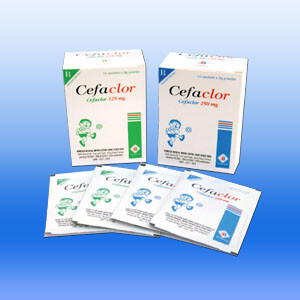
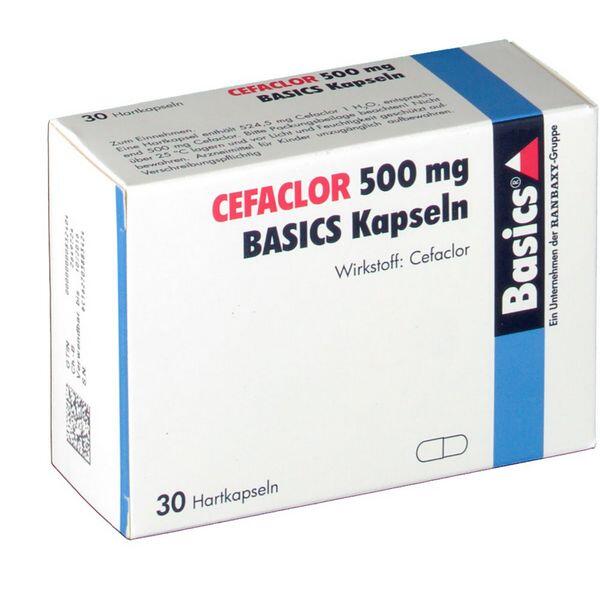
Cefaclor is a semisynthetic cephalosporin antibiotic. Cefaclor is commercially available for oral administration as capsules, powder for oral suspension, and extended-release tablets containing cefaclor monohydrate; potency is expressed on an anhydrous basis.
Cefaclor occurs as a crystalline powder and is sparingly soluble in water.
Stability
Cefaclor capsules, powder for oral suspension, and extended-release tablets should be stored in tightly closed containers at a temperature between 15-30°C (59-86°F).
After reconstitution, cefaclor oral suspensions are stable for 14 days at 2-8°C (36-46°F); any unused suspension should be discarded after this period.